


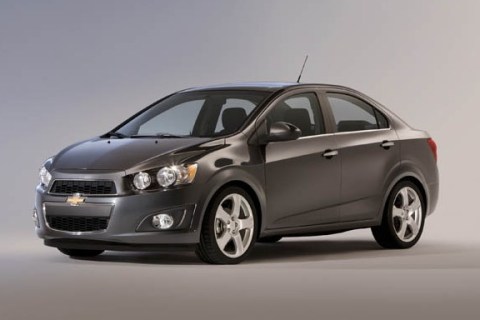
The 2012 Chevrolet Sonic
It’s a screwy time in the auto business. Used car prices recently hit a 16-year high, while average prices paid for new cars also soared in May—at the same time overall new car sales slumped that month. Now that prices seem to be coming down from their peak, GM announces it is jacking up sticker prices, and it may be doing so in order to make the inevitable discounts and incentives all the more impressive down the line.
Edmunds AutoObserver reports that GM is dramatically increasing the sticker prices on two of its smaller models. The 2012 Chevy Cruze will cost between $195 and $1,045 more than their counterparts from 2011. The sticker price of a 2012 Chevrolet Cruze LT with automatic transmission, for instance, will be $20,220, about $1,000 higher than the similarly outfitted 2011 model. The Chevy Sonic, meanwhile, which is replacing the Aveo in the carmaker’s subcompact category, starts at roughly $14,500, or $2,500 more than the base price of the old Aveo.
(LIST: Top 10 Most Valuable Used Cars)
What with today’s economy, why would GM raise prices, especially on its most affordable models? This strategy is directly the opposite of the Volkswagen Jetta, which has grown popular with buyers because of a newly cheaper sticker price, despite getting poor reviews from car experts.
For GM, raising prices works in two ways. Firstly, and most obviously, in the immediate future it increases the chances buyers will pay more for a 2012 model Cruze or Sonic. Secondly, down the line, when the Japanese car makers fully recover from the earthquake, and when the slower sales periods of fall and winter arrive, the fact that GM had earlier increased its sticker prices puts the manufacturer in a better spot to compete via incentives and discounts. Per AutoObserver:
“Toyota and Honda could price aggressively when they come back, which could lead to an excess of supply in this segment, and price wars,” said Jessica Caldwell, senior U.S. industry analyst for Edmunds.com. “Raising prices now as a precursor to that could be helpful, because if GM is going to have to battle Toyota and Honda with incentives, they won’t lose as much margin.”
In the retail world, this practice of jacking up original prices to attract customers with eye-popping discounts later is called “anchoring.” No matter if the company is selling sweaters or Chevy Sonics, anchoring allows the business to make money while offering seemingly amazing discounts.
The savvy consumer should understand how this all works in order to at least avoid drowning in the deepest part of the ocean, so to speak, by paying that ultra-high anchor price.
Yet again, the advice is: Unless you really need a car right now, there’s good incentive to wait to buy until the fall, when there are sure to be plenty of incentives lowering prices on nearly every vehicle out there.