


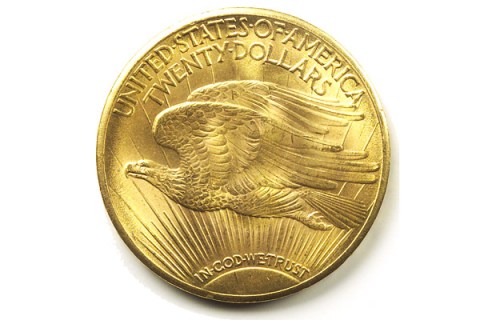
A rare 1933 "Double Eagle" coin.
A Philadelphia jeweler’s heirs are fighting the U.S. government over the ownership of gem mint “Double Eagle” gold coins, worth a total of, perhaps, $80 million or more. Treasury officials say the coins were stolen from Philadelphia’s US Mint in 1933, and the case is set to go to trial.
Most of these coins were destroyed when the United States went off the Gold Standard in 1933. Two are kept at the Smithsonian, but occasionally others come onto the market under uncertain circumstances. Here’s where this case gets really interesting: The jeweler who had these coins was actually stopped by government officials boarding a train, where they seized dozens of Double Eagle coins; but that was in 1933. The family had wanted to keep that information out of this case, but the judge ruled that it could be admitted.
It’s the kind of story, one of intrigue around the tremendous value in coins that had been sitting untouched for decades, that lures people into coins as an investment. Coin dealers like Goldine and Numis Network, which is actually a multilevel marketing outfit that deals in coins, tout the financial benefits of coin collecting.
(MORE: Inside the Fed’s Vault: $1 Billion Worth of Unused Coins)
And in a way it makes sense: What could be better than collecting money?
But here’s the reality: With the exception of exceptionally rare coins in excellent condition, they have generally proven to be an unremarkable investment. And, as About.com’s coin expert warns readers, the more hyped up a coin is, the worse of an investment it will tend to be. One piece of advice: Please, please, please stay away from the “modern commemorative” coins — a series of “rare” coins produced by the US Mint beginning in 1982. These are made to be collector’s items and so everyone who wants them buys them and keeps them in mint condition. It’s unlikely that a powerful secondary market for them will ever develop (see, for instance, collectible plates).
(MORE: Where’d All the Cash Go? U.S. Treasury’s Printing Press Slows)
The story of this lawsuit will likely be used by more than a few coin dealers hocking the dream of a family fortune from rare coin investment. But most of the value in coins comes from dealing them to unsophisticated buyers, not from buying them.