


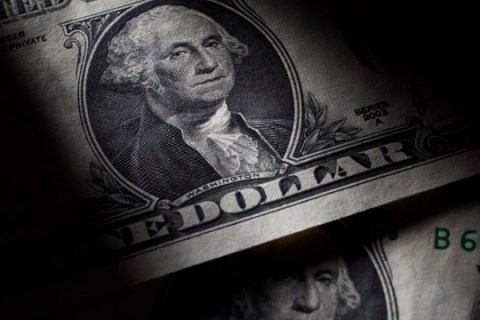
All eyes have been on the plummeting stock market lately. Fewer have noted that the nation’s debt problems have sent the dollar into a downward spiral against currencies like the Swiss Franc and the Japanese Yen. It’s even losing ground against the battered Euro.
Now that stocks are tumbling, too, lawmakers may be more aware of the consequences of their bickering and inaction. In the meantime, however, the buck’s slide is taking a serious toll on many investors and retirees, not to mention our collective ego.
Let’s start with the ego thing.
(MORE: Unemployment Dips: Economy Adds 117,000 Jobs)
The Chinese, who have at times pegged their currency to the dollar, are all over this issue, bullying us like we’re wimps on a playground. The Wall Street Journal reports that:
- China’s state-run Xinhua news agency published biting commentary stating that the new debt-ceiling deal “failed to defuse Washington’s time bomb for good, only delaying an immediate detonation by making the fuse an inch longer.”
- A small Chinese credit-ratings company downgraded U.S. debt and gave it a negative outlook. We’re now on par with Russia, South Africa and Estonia, according to the firm.
- China’s central bank chief, Zhou Xiaochuan, called us out for inadequately addressing our debt problems, which he says, “encumber the global economic recovery.” China is the U.S.’s biggest foreign creditor and is increasingly looking for non-dollar investments for its massive reserve.
- Russian Prime Minister Vladimir Putin is even pushing us around, calling the U.S. a “parasite” on the global economy.
This trash talk isn’t easy to stomach. So it’s become a presidential ritual to say the nation wants a strong dollar — or to say nothing at all — even as policymakers quietly embrace the weakening buck. It’s true that a weak dollar will, eventually, have salutary effects on U.S. exporters, whose goods become more competitively priced overseas — and that, eventually, will strengthen the economy. But in the meantime it’s a mixed bag for investors and retirees.
U.S. stocks have been under extreme pressure since the debt-ceiling deal, signaling worries that our increasingly limited options are shoving us toward a double-dip recession. Now, some are arguing that Treasury bonds are no longer risk free. Ouch. If such thinking spreads, interest rates are going higher.
(MORE: Why the Markets Hate the Debt Deal)
In this environment, investors should tread cautiously in the stock market and lean toward foreign companies, U.S. and foreign multinationals, and small-to-midsized U.S. companies with a big export business. An immediate fixed annuity from a top-rated insurer along with short-term Treasury securities (rates may go up; you need instruments you can hold to maturity) is a good way to spread your risk with an income stream.
Retirees most likely to feel the effects of the weak dollar are those living on a fixed-income. As the dollar falls, foreign products get more expensive at home and a retirees’ income doesn’t go as far. Buying U.S.-made things will partly offset the markup. But just try finding a cell phone, light bulb, laptop or flat-screen TV made in the States.
Retirees who want to travel or even relocate overseas will feel the pinch. Your dollar-denominated income won’t go as far in many countries. Consider a trip (or relocation) to a place like Panama, where the currency is pegged to the dollar. That will be easier on your wallet, even if it does not suit your ego.