


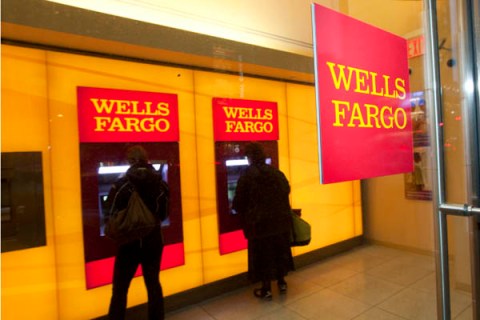
Banks have been scrambling to find ways to boost their revenue after the government stepped in to quash overdraft abuses and cap interchange fees. Free checking accounts have already become harder to come by as banks have upped their minimum balance requirements or required direct deposit. They’ve added or increased fees for everything from talking to a teller to using an out-of-network ATM. The newest volley comes from Wells Fargo, which is charging some of its customers in five states $3 a month just to use their debit cards.
Starting in October, some checking account customers in Georgia, New Mexico, Nevada, Oregon and Washington will be charged $3 for each month they use their debit cards. It doesn’t matter whether the customer presses “credit” or “debit” on a checkout payment terminal; the fee still applies, as it does for any payments made with the card, such as online purchases. Given that debit cards recently passed paper checks in popularity, it’s safe to assume most customers would have to significantly alter their spending habits if they wanted to avoid the fee.
(MORE: 4 Ways a Prepaid Debit Card Can Cost You)
Chase was actually the first out of the gate with this particular fee; it began a test program earlier this year charging what it characterizes as a small number of customers a monthly fee to use their debit cards. Right now, it’s too early to tell if these programs will be implemented nationwide, or if other banks will jump on the bandwagon.
If recent research is any guide, though, it’s possible that fees like this could be here to stay. Financial industry magazine PaymentsSource published the results of a survey in May that reveals consumer attitudes about debit fees. A majority of respondents said they’d rather pay a monthly fee to use their debit cards than pay a fee for each debit transaction.
Interestingly, a smaller percentage — about a third — of respondents said they’d rather pay a small annual fee and a per-transaction fee, even though this option would cost about half as much as a flat monthly fee based on average debit card use. It seems that fees are an out-of-sight, out-of-mind type thing; the annoyance factor seems to count as much, if not more than the actual amount consumers pay.