


Paying $100K for a parking spot sounds totally ridiculous. Unless, that is, that spot would sell for $125K two years after it was purchased—in which case, it’d be a better investment than most traditional real estate has been lately.
How’s this as a sign of rising income disparity? On the one hand, due to rounds of foreclosures, rampant unemployment, and depressed local economies, there’s a hot market for homes selling under $10,000 in cities such as Baltimore, Detroit, and Las Vegas. While far from luxurious, many of these properties come with their own driveways, where owners can park a car or three or no extra charge.
On the other, the Wall Street Journal reports a surge of luxury condos in the downtowns of several North American cities such as Toronto, San Francisco, and Boston, where parking spots alone are selling for six figures.
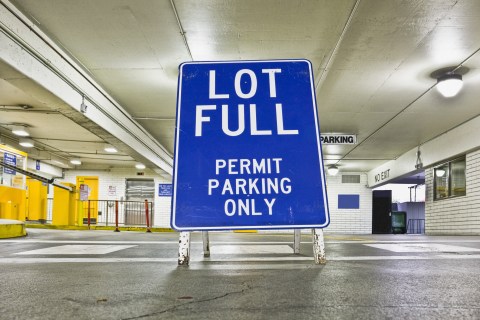
These parking spots are typically in garages below the condos, and for the most part, they’re pretty much what you’d expect in a parking spot, nothing more. The photo in the story shows a gray concrete garage in Boston with painted parking lanes and numbers where drivers park. It looks clean and functional. There are no signs of urine, cigarette butts, discarded fast food containers, or other debris so common in public parking garages. But it’s not like the garage is painted in vibrant designer colors, and there aren’t any walk-in closets or granite countertops or anything. It’s just a place to park your car.
(MORE: Study: The Rich Really Are More Selfish)
What makes these parking spaces exceptional is what makes so much real estate exceptional: location, location, location. These spots are located directly below condos owned by super rich people. They’re people who paid at least $1 million to live where they live, and they’re people who have enough money to justify dropping another $75K, $100K, even $125K to get the most convenient spot possible to park their cars. Sure, they could probably park somewhere else for cheaper, but as one broker told the WSJ:
“You’re dealing with the elite,” he says. “Someone who has money and is willing to spend a million, million and a half on a unit, you’re not going to park your car in a building that’s half a block away. That’s just not going to happen.”
Boston is one of the cities where premier parking spots have pushed over the six-figure mark. The couple profiled in the story’s intro bought a downtown condo for $1.3 million and a parking spot for $100,000 two years ago. While properties in the building designed to house human beings haven’t appreciated since then, the building’s parking spots are now selling for $125,000.
(MORE: Why the Rich Shoplift More Than the Poor)
That makes the price of heading over to see the Red Sox at Fenway Park, where parking costs $30 to $50 on game days, a bit less outrageous.
Brad Tuttle is a reporter at TIME. Find him on Twitter at @bradrtuttle. You can also continue the discussion on TIME’s Facebook page and on Twitter at @TIME.