


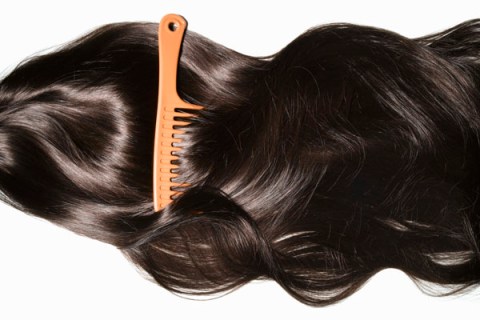
Brunette wig with comb
Here’s a crime trend that’s as equally bizarre as the rise in dog kidnappings, though not as heart-wrenching: Thieves have increasingly been targeting salons and beauty supply stores around the country to steal wigs and weaves made with valuable hair imported from overseas. Stores are being ripped off of tens, even hundreds of thousands of dollars of merchandise in each human hair heist.
The Atlanta Journal-Constitution reports that thieves in cities such as Atlanta, Detroit, San Diego, Houston, and Chicago have been employing smash-and-grab techniques and even ramming trucks into storefronts to steal high-end human hair. Hair has become a hot target for criminals largely because hair—and the long weaves, extensions, and wigs it’s used for—is hot among consumers, who pay $100 and up per bundle to try and reproduce the look popularized by reality star Kim Kardashian and others.
(MORE: Dognapping! Economy’s Being Blamed for a Rise in Dog Kidnapping)
Thieves seem to know exactly what they are looking for: In an incident in Chicago, for example, a team of men made off with $70K to $90K worth of hair from a beauty supply store and didn’t bother touching the cash register at all.
Apparently, an illicit hair market has developed in many cities. Salon owners say random vendors regularly stop in to try and sell their merchandise. In many cases, only an expert would be able to tell whether the hair is high-quality real deal, most of which is imported from India and Malaysia, or shoddy synthetic material. It’s also nearly impossible to tell whether the hair at hand was stolen.
Brad Tuttle is a reporter at TIME. Find him on Twitter at @bradrtuttle. You can also continue the discussion on TIME’s Facebook page and on Twitter at @TIME.