


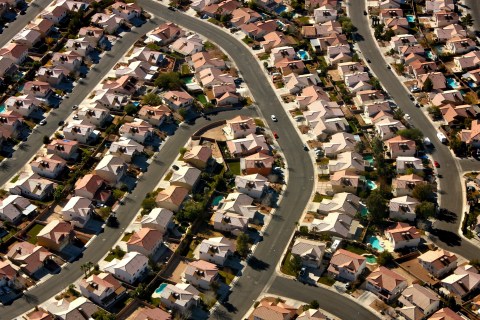
For well over half a century, the American dream has typically centered on life in the suburbs. A move to the idyllic suburbs—picket fences, sidewalks, cul-de-sacs, the whole deal—has traditionally signified success, a move up the economic ladder. Lately, however, the ‘burbs host millions more residents living below the poverty level than do America’s “poor” inner cities, and poverty rates in suburbia are rising faster than any other residential setting.
According to the Brookings Institution’s recent analysis of Census data, poverty rates rose all over the U.S. during the recession era: From 2007 to 2010, poverty rates increased in 79 of the 100 largest metro areas, and median household income decreased in 82 of the 100 largest metro areas.
But one type of area in particular—the prototypical American suburb—has gotten poorer quicker, and that’s been the trend even before the financial collapse of 2007. The Brookings report states:
A combination of factors including overall population growth, job decentralization, aging of housing, immigration, region-wide economic decline, and policies to promote mobility of low-income households led increasing shares of the poor to inhabit suburbs over the decade. From 2000 to 2010, the number of poor individuals in major-metro suburbs grew 53 percent, compared to 23 percent in cities.
Overall, urban residents are still far more likely to be poor than their counterparts in suburbia: The poverty rate in U.S. cities in 2010 stood at 20.9% in cities, compared to 11.4% in the suburbs.
(MORE: More Young Adults Are Poor, Live With Their Parents)
But the suburbs are catching up in the race to the bottom, and there are currently more suburban residents than city dwellers living below the poverty level. Per CNN Money’s story about the Brookings Institution’s analysis, there were 15.4 million suburbanites living in poverty in 2010, compared to 12.7 million living below the poverty level in cities. Whereas poverty levels rose 11.5% from 2009 to 2010 in the suburbs, they inched up 5% in cities.
From 2000 to 2010, the poor populations skyrocketed in the outskirts of many cities: The Atlanta, Austin, Dallas, and Milwaukee areas are among the 16 spots around the country where the number of suburban residents below the poverty level more than doubled during the decade. During the recent years of economic strife (2007 to 2010), the U.S. suburbs added 3.4 million poor, compared to 2 million more poor people in cities.
(MORE: The Sad, Sorry State of the Middle Class)
Brad Tuttle is a reporter at TIME. Find him on Twitter at @bradrtuttle. You can also continue the discussion on TIME’s Facebook page and on Twitter at @TIME.