


Why would a company that’s in the business of selling clothing and outdoor gear tell consumers that they should buy fewer of the products it makes?
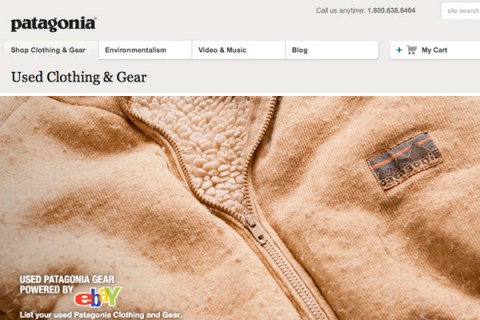
Last month, the outdoor outfitter Patagonia launched a “buy less, buy used” initiative, in which the clothing manufacturer teamed up with eBay to create a spot specifically for consumers to buy and sell used Patagonia gear. The company also announced it was actively discouraging consumers from doing what most businesses actively encourage them to do—consume, consume, then consume some more.
When the initiative was introduced, Patagonia’s Yvon Choinard read a prepared statement, explaining:
“This program first asks customers to not buy something if they don’t need it. If they do need it, we ask that they buy what will last a long time — and to repair what breaks, reuse or resell whatever they don’t wear any more. And, finally, recycle whatever’s truly worn out.”
On the surface, this seems like a bad business move. Would a worker at the McDonald's counter ever tell a customer he shouldn’t order more food than he needs?
(LIST: 12 Things You Should Stop Buying Now)
But Patagonia is no ordinary business. The company has a longstanding tradition of corporate responsibility and environmentally friendly practices, and the new Common Threads Initiative—which encourages consumers to reduce the amount of stuff they buy, and also repair, reuse, and recycle when appropriate—aims to minimize the damage being done to Mother Nature.
Beyond helping the environment, though, discouraging customers from excessive consumption could be a brilliant business tactic. Firstly, the move bolsters Patagonia’s already strong environmental street cred, and likely attracts even more customers who care about green issues. Secondly, the message spread is not simply “buy less” but to buy quality items that will last. And guess which outdoor outfitter specializes in making quality clothing and gear built to last? Patagonia’s Common Threads Initiative pledge says simply:
WE make useful gear that lasts a long time.
YOU don’t buy what you don’t need.
The message, which isn’t all that subtle, is: If you’re going to be buying stuff, you should buy it from us. Just don’t overdo it, OK?
A Harvard Business Review post points out that the initiative helps Patagonia justify the high prices of its merchandise. From the consumer’s point of view, paying a premium is OK if the item will last (which Patagonia promises is the case), and if one or very few of the items will ever be purchased (which goes along with Patagonia’s “buy less” motto). Interestingly enough, the HBR post notes that encouraging customers to buy less and buy used may, in fact, result in a lot more new Patagonia gear being sold:
Two types of customers could be more inclined to buy new Patagonia apparel as a result of Patagonia’s efforts: customers who make decisions based on sustainability considerations and customers who can now sell their used Patagonia apparel for cash to buy new apparel. Indeed, John Donahue, the CEO of Patagonia’s new business partner, eBay, suggested this might be possible: “Patagonia is extending its customer base and increasing it. People who are selling it are likely to turn around, take the money they got, and buy the new Patagonia products.”
(LIST: 10 Things That Are Actually Getting Cheaper)
So while the initiative is encouraging consumers to buy less, Patagonia, of course, is hoping that people will just buy less crap from the competition—and buy more of the products it makes and sells.
Brad Tuttle is a reporter at TIME. Find him on Twitter at @bradrtuttle. You can also continue the discussion on TIME’s Facebook page and on Twitter at @TIME.