


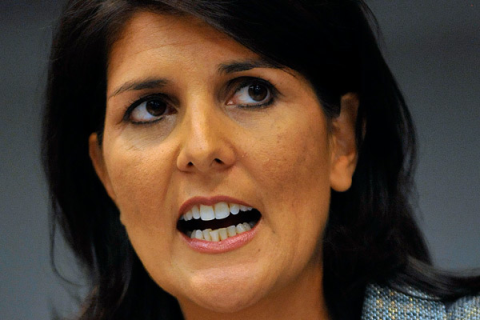
On Wednesday, Charleston’s Post & Courier.com revealed that South Carolina Governor Nikki Haley has actively used her influence to prevent the implementation of federal health care reform — and, arguably, spending federal funds to do so.
In March, the Republican governor told a committee charged with deciding how the state should implement federal health care exactly what they should say in its final report — before the committee had held its first meeting. In an email to the committee members, Haley gave them their marching orders: “The whole point of this commission should be to figure out how to opt out and how to avoid a federal takeover, NOT create a state exchange.”
“Now,” the paper reports, “some of those involved in the dozens of meetings are calling the entire planning process a sham that wasted their time and part of a $1 million federal grant.”
State exchanges are key to health reform legislation; they are the marketplaces where coverage will be sold to individuals and small business employees beginning in 2014.
Not surprisingly, the nonpartisan committee and four subcommittees, which met more than 30 times over the past seven months, followed orders. In a report sent to the governor two weeks ago, the panel rejected the idea of a state-run exchange, saying South Carolina has few incentives to be a “first-mover” nationally.
(MORE: 5 Signs That You’re Borrowing Too Much)
Friday, the S.C. Department of Health and Human Services released the e-mails to the newspaper in response to a Nov. 16 public records request. Post & Courier reporter Renee Dudley pointed out that “the newspaper had made a nearly identical request of the governor’s office in May, but the office did not include the emails in its response.”
Dudley quotes John Crangle, executive director of Common Cause of South Carolina, as follows:
“They took the money on the pretense they would conduct an objective analysis of whether the state should do the exchange or not. … But they decided what they were going to find before they even started the research process.’ The most recent progress reports filed with the federal government show the state used about $109,000 of the $1 million grant through the end of November.”
Frank Knapp, who participated in the meetings as president of the S.C. Small Business Chamber of Commerce agreed with Crangle: “This confirms this whole thing was an effort to justify the million-dollar grant, but the reality is they had no intention of even exploring whether the state should establish an exchange — which is exactly what the grant called for.”
MORE: How Health Care Reform Can Create Jobs — and Cut Costs