


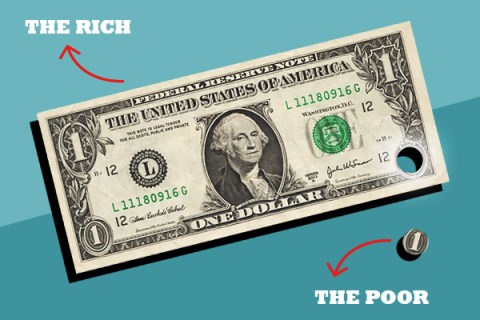
Tensions in the U.S. between rich and poor are at a 20-year high, according to a new study from Pew Research. This conflict now tops the discord between blacks and whites, young and old, and immigrants and the native-born.
In the survey, 66% said they believe there is “strong conflict” between rich and poor—a huge jump from 47% who felt that way in 2009. This catapults class warfare ahead of conflict between immigrants and the native-born, which had previously been the area registering the most conflict.
(MORE: The Number of ‘Improving’ Housing Markets Nearly Doubles)
Many credit the Occupy Wall Street movement, which put a spotlight on income inequality with protests in the fall. Meanwhile, recent census data underscore the divide. For example, the share of U.S. wealth held by the top 10% of the population has jumped to 56% from 49% in 2005.
Young adults, Democrats and blacks remain the most likely as in previous years to cite strong conflict between rich and poor. But in the last two years, three swing groups—whites, middle-income Americans and political independents—registered some of the biggest increases in those holding this view.
Clearly, something is going on. But the focus on class may miss an important point: tensions are up pretty much across the board, and that probably has less to do with bank account envy than the general feeling that life is really hard right now. Unemployment remains high. Wages have stalled. The stock market has gone nowhere and a generation now faces the prospect of retiring with insufficient resources or working longer than they had planned. People are just plain grouchy.
(MORE: Meet the Puppet Who Made Who Made $11,000 Last Year)
Those saying there is strong conflict between young and old, for example, rose to 34% from 25%. That makes sense. Young and old have been thrown together like rarely before in recent decades. They are competing for the same jobs. Adult kids who can’t find work are returning home; retirees running out of money are moving in with their kids.
Those identifying strong conflict between immigrants and native-born Americans rose to 62% from 55%. Again, in a tough economy these groups are battling for some of the same jobs as well as for funding for various government support services. Interestingly, those saying there is strong racial conflict remained about the same (38% vs. 39%). Call that the good news. Maybe there is some sense that we’re all in this together.