


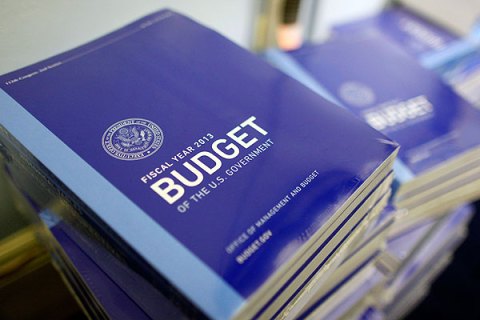
Obama's new budget calls for the Buffett Rule, which is a tax on millionaires.
Say goodbye to the much-loathed Alternative Minimum Tax and hello to the Buffett Rule. Sweet relief. The AMT has perplexed taxpayers and agonized accountants for decades. But wait: Are the AMT and the Buffett Rule really so different?
The two take aim at different types of tax avoidance, so the details have little in common. But the headline is the same: Both were designed to make sure that wealthy citizens pay their fair share of income tax—without creating a tax monster that somehow reaches down to regular people. When the AMT came into being in 1969, rich people were avoiding tax through loopholes and legal deductions. Today, there is less of that. But these days some big earners are manipulating income to look like capital gains, which is taxed at a far lower rate — and the Buffett Rule is intended to stop that. Different schemes, different measures.
(MORE: 3 Ways to Know if You Can Retire)
Incredibly, the flaw that most riles critics of the AMT—that the tax is not indexed to inflation—is also true of the Buffett Rule.
None of this is to say the Buffett Rule has nothing going for it. For one thing, it is simple. The AMT requires certain taxpayers to compute two returns and pay the higher of the two bills. Tax planning may be a nightmare because the AMT and the regular code often contradict. A big mortgage might make sense under the regular code but not if you slip into the AMT zone.
The Buffett Rule eliminates that kind of confusion. From the Obama budget:
“The President is now specifically proposing that … those making over $1 million should pay no less than 30% of their income in taxes. The Administration will work to ensure that this rule is implemented in a way that is equitable, including not disadvantaging individuals who make large charitable contributions. And he is proposing that the Buffett rule should replace the Alternative Minimum Tax.”
Score one for simplicity. You make $1 million, you pay. Even the $1 million threshold is simple—and it is high enough that it unquestionably qualifies as wealthy no matter where you may live. Still, without indexing the figure to inflation it’s a slam-dunk that some years from now that level of income won’t feel so rich anymore and we’ll be wondering why the IRS is picking on this group of taxpayers.
(MORE: Warren Buffet Is on a Radical Track)
That’s what went wrong with the AMT. Trigger points for a tax established 43 years ago did not allow for the rising cost of living; the tax gradually encroached on the upper middle class and threatened the middle class as well. Only a series of temporary congressional fixes has stopped the AMT from becoming Everyman’s monster and has staved off certain voter revolt. As Daniel Gross notes in a post on the subject:
“Almost every year, Congress passes a ‘patch’ that prevents the AMT from ensnaring vastly more people. Had Congress not acted, as the Tax Policy Center points out, in 2012, “45% of all tax filers with cash income between $75,000 and $100,000 will pay the AMT, up from 0.4% in 2011, when the temporary AMT fix or ‘patch’ is in place.”
The Buffett Rule resets the target to an appropriate level, for now. But without an annual inflation adjustment, the same old issues are certain to resurface.
MORE: The Numbers and Politics of Barack Obama’s New Buffett Rule