


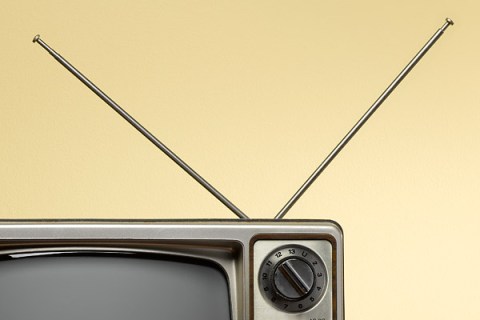
Getting TV stations through the airwaves may seem like an anachronism in the age of streaming video online. But actually, the rise of Hulu and Netflix seems to be helping the rabbit ear industry.
Over the last few years, many of us cut the cord on cable in favor of streaming programming online. Hulu Plus ($8 a month), Netflix streaming ($8 a month) and even Amazon ($80 a year for Amazon Prime with free, instant access to shows and movies) all have the same sort of content as cable but costs much less than a $50-plus cable subscription.
(MORE: Non-Cable Subscribers Will Have to Pay $4 for March Madness Games Online)
It’s sparked industry analysts to predict the demise of the traditional cable package, even though some providers like Comcast believe they have started to right the ship, while claiming that massive cord-cutting has been exaggerated. Comcast recently announced that it lost “just” 17,000 video subscribers in the fourth quarter, which is the fewest in five years.
Naturally, with so many ways of getting broadcast content, you would think that accessing programming through an antenna would go the way of the Walkman. But actually, the industry is experiencing a bit of a boom.
According to The Wall Street Journal, TV-antenna sales are up – big. One retailer – Antennas Direct – says it expects to double last year’s sales of 600,000 antennas, which was itself an increase from 400,000 sold in 2010. Walmart even recently announced it would start stocking the seller’s antennas.
What’s going on? It seems that a number of consumers have decided to ditch cable altogether, and they are getting shows through a combination of over-the-air broadcast stations and online streaming services. “Every time that Hulu and Netflix enhance their services, our phones light up,” Richard Schneider of Antennas Direct told The Journal.
(MORE: What Would Steve Jobs Do?)
In a further hybrid of old and new technologies, a new service called Aereo will be launching in mid-March in New York that will allow cable-cutters to stream local broadcast signals online. It’ll be $12 a month, but will have a 30-day free trial period.
Still, the number of Americans who receive broadcast channels over the air is tiny, estimated at less than 10%. Most get those channels through their pay-TV packages that come with many more cable channels. But a lot of those channels are still accessible and completely free over the airwaves (after you purchase an antenna, of course, which ranges from as low as $10 to $150). And in parts of the country with good reception, it makes sense that consumers are turning to traditional rabbit ears while also getting content online. Most places in the U.S. can get on average 30 to 45 channels over the air.