
Our New Era of Uncertainty

Phil Ashley / Getty Images

We’re in a new age of financial volatility that could last years, and it seems that nobody has the answers to get us out.

In TIME Magazine’s special Money issue out next week, Assistant Managing Editor Rana Foroohar describes this new volatile era, one in which the West seems to have run out of solutions to stop the continuing economic slide while European policymakers fiddle as Rome (and Athens and London) burns.

(MORE: Poverty Rates Soar in Suburbia)
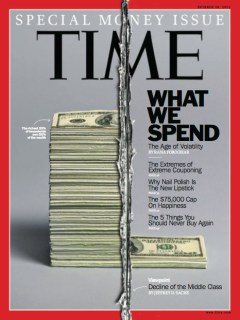
The Federal Reserve has again tired to stop the economic hemorrhaging by buying up longer term Treasury bonds, hoping that will drive down mortgage rates and get homeowners out from being underwater on their loans. But Foroohar argues that consistent 2% GDP growth in the U.S. seems to be a foregone conclusion, and it looks increasingly like Japan’s last two stagnant decades. Our new era will most likely bring shortened cycles of boom and bust, with more frequent downturns, but more robust recoveries. That, at least, should provide a ray of hope for those leaders trying to mend the global economy.

To read more, pick up next week’s issue of TIME Magazine.

Related Topics: Debt Crisis, Europe, federal reserve, recession, Time Magazine, Volatility, Financial Values Survey
  • Latest on Moneyland

    This Free Pizza Offer is Being Criticized as Discrimination

    When retailers and restaurants offer freebies, the point is to draw attention—not controversy. The only reason to protest 7-Eleven for giving out free Slurpees or Haagen-Dazs for dishing out free ice cream cones might be that the complimentary serving sizes are too small. But what do you expect when you’re paying $0? Now, though, a Texas-based pizza chain is drawing heat over its upcoming giveaway—in which pizza is free only to customers who order in Spanish.

    America's Uneven Economic Recovery: The 10 Best and 10 Worst CitiesDaily Finance

    Mark Viker / Getty Images

    The Fee That Credit Card Issuers Are Leaving Behind

    Banks, the thinking goes, have never met a fee they didn’t like. Yet one credit card charge that has been standard for years—the “foreign transaction” or “foreign currency” fee, which tacks on an extra 3% or so to every hotel stay, meal, or tchotchke purchased outside the U.S.—is slowly but surely being dropped by more and more card issuers. Why?

blog comments powered by Disqus