


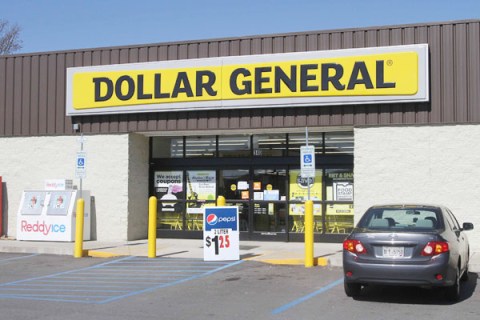
The family-run drugstore on Main Street has been dying for decades. Now, the big national chain pharmacies—which helped push those family operations to the brink of extinction—are being surpassed in terms of total locations by dollar stores. What does this say about how people shop nowadays? And about the state of the economy?
One of the hottest retail trends in recent years has been the rise of the dollar store. During a period when many retailers have struggled as a result of consumers scaling back, dollar stores boomed for obvious reasons—one way consumers cut expenses was by spending more time in dollar stores.
Surveys have shown that today’s shoppers are more likely to make purchases in dollar stores lately, and chains such as Dollar Tree, Dollar General, and Family Dollar have experienced outstanding sales growth as a result.
Riding the wave of newfound popularity and better-than-ever sales figures, dollar stores have naturally been expanding to new locations all over the country.
(GALLERY: 10 Retailers Thriving During Tough Times: Dollar Stores)
Now, according to a study by retail research firm Colliers International, dollar store locations outnumber drugstore locations in the U.S. Specifically, Colliers added up the number of locations for four national dollar store chains (Dollar General, Dollar Tree, Family Dollar, 99 Cents Only), and compared that figure to the total number of locations for the country’s three biggest drugstore chains (CVS, Rite Aid, Walgreens).
The tally, as of mid-2011, stood at 21,500 dollar stores vs. 19,700 drugstores.
That tally, mind you, doesn’t factor in mom-and-pop drugstores (yes, there are some left), nor, many New Yorkers might point out, does it include other drugstore chains such as Duane Reade—the chain that seems to run thousands of stores in New York City, but actually only has Duane Reade “over 253 stores” according to its website.
For that matter, is it fair to compare four dollar store chains to only three drugstore chains? It’s arguable that the 99¢ Only Stores shouldn’t have been included in the study. The chain, while popular in the West (California, most obviously), only has fewer than 300 locations—small potatoes compared to the others.
(MORE: Why You Shouldn’t Buy Groceries at Drugstores)
In any event, the Colliers International study does an interesting job analyzing and differentiating each of the dollar store operations. Dollar General, for instance, “positions itself as rural America’s convenience store,” and is primarily located in smaller communities—often ones even too small to have a Walmart in town. The typical Dollar General shopper is in and out of the store in 10 minutes.
Family Dollar, on the other hand, often likes to position its stores right next to supermarkets and big-box retailers. The idea is that it’ll attract the consumers who prefer a smaller, more convenient, not to mention less expensive, shopping experience compared to the stores nearby.
All four of the dollar store chains focused on in the study have a few things in common, though. For one, they’re all stocking more food and other “consumables” (paper products, health and beauty supplies) than they used to, which makes sense: Once these consumables are consumed, the shopper will need to return to the store for more. Repeat business!
(MORE: Holiday Spending: Just How Important Is Free Shipping to Online Shoppers?)
Also, the dollar store chains have all experienced remarkably strong sales in recent years, and have been expanding like crazy as a result. Dollar General, for example, has nearly doubled its location total over the past decade, 5,000 to more than 9,500 stores today. And counting.
Brad Tuttle is a reporter at TIME. Find him on Twitter at @bradrtuttle. You can also continue the discussion on TIME’s Facebook page and on Twitter at @TIME.