


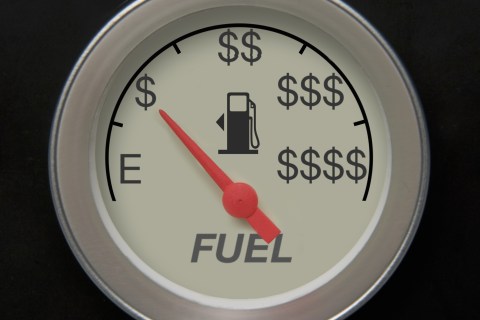
Most years, the cost of filling up at the pump drops in February. Why? Demand for gas decreases during the mid-winter as people go into semi-hibernation, and gas prices tend to follow on a downward trajectory, before rising again when the weather starts to warm up. Thus far in 2012, however, while demand remains low, prices are soaring, reaching all-time highs for this time of year.
The current national average for a gallon of regular is about $3.52. That’s a penny below the average for all of 2011, which was the priciest year ever for gasoline.
But February is typically one of the cheaper months for prices at the pump. One year ago at this time, the national average was just $3.12 per gallon. If pricing follows standard seasonal patterns, most drivers will be paying $4 a gallon by springtime, and 2012 will easily beat out 2011 for the dubious title of Most Expensive Year Ever for Gas.
(MORE: Gas Price Hike: Expect $4 a Gallon — Or Perhaps $6! — By Springtime)
Drivers in some cities, such as New York and Los Angeles, are already paying close to $4 a gallon. The Los Angeles Times reports that the average for a gallon of regular for all of California is now $3.835, up 7.7¢ from the week before. The state has never seen such high prices so early in the year:
In the past, the state’s average had never topped the $3.80 mark before March. And February is usually a month when prices fall.
Consumer Reports notes that over the past week, gas prices rose 5¢ or more in most parts of the U.S., including New England, the Lower and Central Atlantic, the Gulf Coast, and the West Coast.
Why are prices rising? As mentioned, normally, prices rise at least partly as a result of increasing demand. That’s not the case this year, reports Bloomberg Businessweek:
“Petrol demand is as low as it’s been since April 1997,” says Tom Kloza, chief oil analyst for the Oil Price Information Service. “People are properly puzzled by the fact that we’re using less gas than we have in years, yet we’re paying more.”
If demand isn’t playing a role, what’s causing the price hike? Apparently, the current rise in prices is partly being caused by the expectation that prices will rise even more substantially in the near future. Hedge funds and large money managers are putting lots of speculative money into gasoline futures, and prices for crude oil—from which refineries make gasoline—are much higher than they normally are at this time of year. As a result, prices at the pump are also much higher than they normally are at this time of year.
(MORE: 2011 Is Priciest Year Ever for Gasoline: $3.53 Per Gallon, Over $4K Spent Per Household)
Instead, drivers who usually could expect to get a break at the pump during cold mid-winter days are facing gas prices that they don’t like to see even in the summer.
Brad Tuttle is a reporter at TIME. Find him on Twitter at @bradrtuttle. You can also continue the discussion on TIME’s Facebook page and on Twitter at @TIME.